What the three numbers mean
ISO 8573-1:2010 describes compressed air quality with one class for each of three contaminants. The code is written in the order particles, water, oil. For example, 2.4.1 means particle class 2, water (humidity) class 4 and oil class 1. A dash means that contaminant is not specified.
Writing the requirement this way avoids vague requests such as “dry, clean air”. Two suppliers reading 2.4.1 should be talking about the same thing.
Water: pressure dew point classes
The water class is usually set by the pressure dew point: the temperature at which water vapour starts to condense at line pressure. A lower dew point means drier air.
| Class | Pressure dew point | Typical way to reach it |
|---|---|---|
| 1 | −70 °C or lower | Desiccant dryer, low-dew-point or combined solution |
| 2 | −40 °C or lower | Desiccant dryer (heatless or heated) |
| 3 | −20 °C or lower | Desiccant dryer |
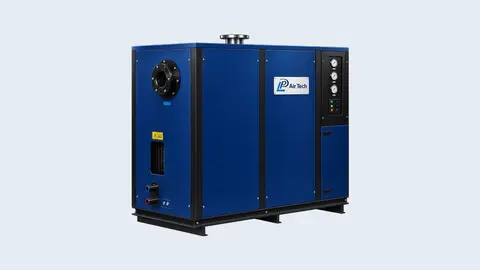
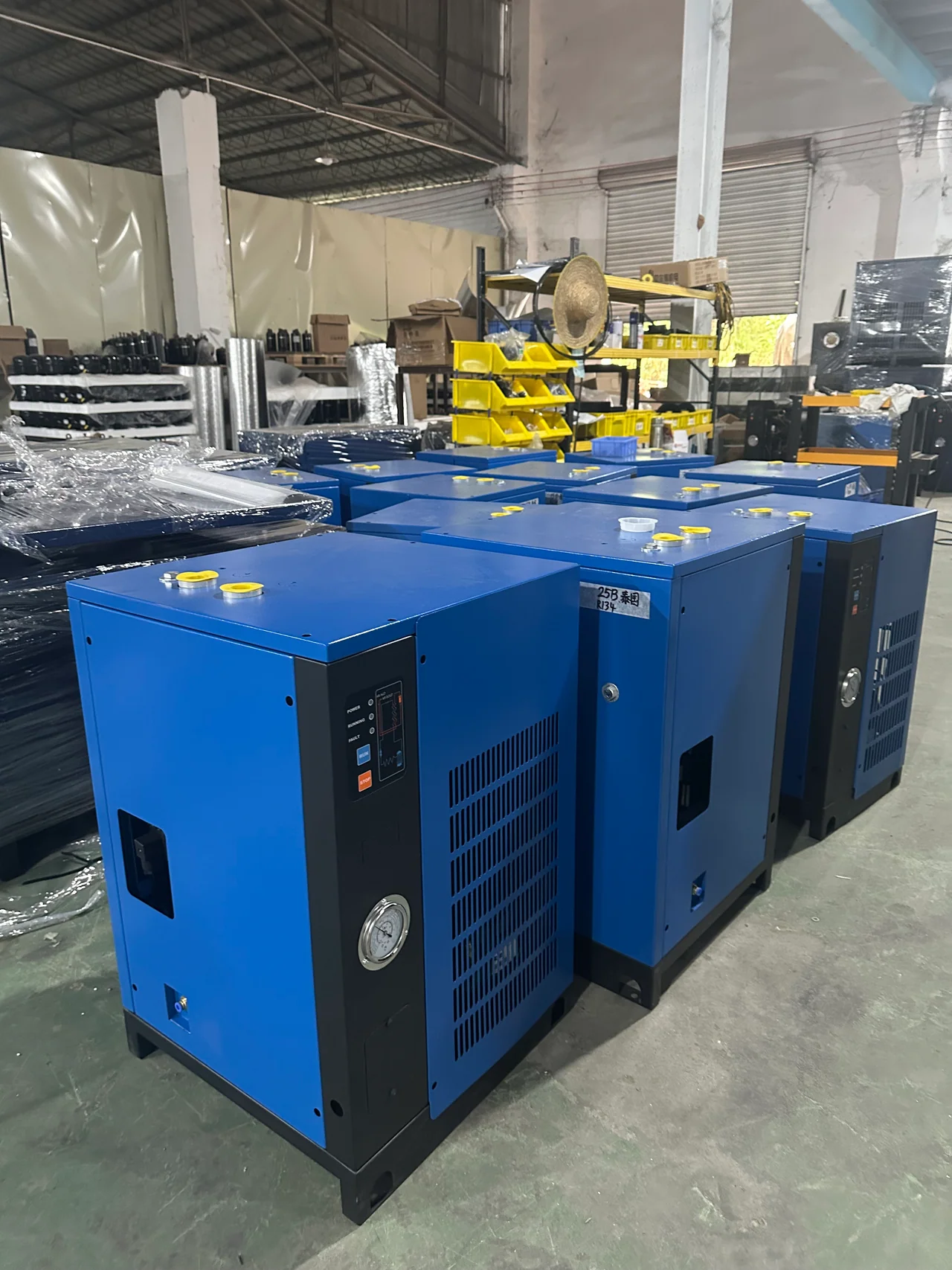
| 4 | +3 °C or lower | Refrigerated dryer |
| 5 | +7 °C or lower | Refrigerated dryer at wider conditions |
| 6 | +10 °C or lower | Refrigerated dryer at wider conditions |
Classes 7 to 9 describe liquid water content in g/m³ instead of a dew point. They are rarely used when specifying dried air.
Oil: total oil classes
The oil class counts total oil, which means liquid oil, oil aerosol and oil vapour together.
| Class | Total oil |
|---|---|
| 1 | 0.01 mg/m³ or less |
| 2 | 0.1 mg/m³ or less |
| 3 | 1 mg/m³ or less |
| 4 | 5 mg/m³ or less |
Class 0 is a stricter level that the user and the supplier agree on, and it has to be shown by testing. An oil-free compressor does not by itself prove class 0 at the point of use, because oil can also come from the intake air and the pipework.
Particles
The particle class is set by the maximum number of particles of different size ranges in one cubic metre of air. The exact counts for each class are in the standard, so check the published text before you copy them into a specification.
What this means for dryer and filter selection
Always confirm the dew point at your real operating pressure and inlet conditions. A dryer’s rated dew point applies at its stated rating conditions, and a hot, humid inlet can move the result.
- Water class 4 (+3 °C): the usual result of a refrigerated air dryer. It suits general plant air, tools and pneumatic systems.
- Water class 3 or 2 (−20 °C to −40 °C): needs a desiccant dryer, such as a heatless or heated type.
- Water class 1 (−70 °C): needs a low-dew-point desiccant or a combined solution.
- Oil and particle classes: these are met with filters placed before and after the dryer. A dryer alone does not change the oil class.
How to specify the air you need
- Start from the application, not from the highest class. Each step down in dew point or oil content adds equipment, energy use and maintenance.
- Write the requirement as a three-part code, for example 2.4.1, and say where it applies: at the compressor, at the dryer outlet or at the point of use.
- Ask for the test method and the conditions behind any claimed class.
- Send us the flow, pressure, temperatures and the class you need. Our engineers will confirm a configuration, and will tell you if a simpler option is enough.
Quick answers
- Is a lower class number always better? Lower numbers mean cleaner or drier air, but they also mean more equipment and running cost. Choose the class your process needs.
- Does a refrigerated dryer give class 2 water? No. A refrigerated dryer is normally rated at about +3 °C, which is class 4. Lower dew points need a desiccant dryer.
- Can a dryer fix an oil problem? No. Oil classes depend on the compressor and on filtration, not on drying.
- Where do these numbers come from? From ISO 8573-1:2010. Use the published standard for formal specifications.